

Estimated Reading Time: 5 Minutes
It’s summertime, which is when you should think about your roof repairs. Now is the time to have a good look at your roof, because once it starts raining, it’s too late.
Once you purchase a home in Costa Rica, roofing and roof repairs become an important part of your life. Most homeowners don’t pay attention to what they can’t see: the roof. You should know that once the rainy season begins, your leaky roofs and flashing installations need repairs. During the rainy season, there is much more rain than we get back home.
So if you own a single-family home in Costa Rica, you need to pay attention to your roof and gutters.
Most homeowners don’t pay attention, and once it starts raining, they end up doing a quick-fix roof repair that doesn’t hold for the whole season. Quick-fix roof repair methods using silicone tubes to fill gaps are nothing more than band-aids on open wounds. The leaking roofs seldom satisfy homeowners. It rains much more now in Costa Rica than it did 20 years ago, which was maybe when your house was built. So, better pay attention to this.
Roofing in Costa Rica is very different from roofing in North America or Europe. The country’s tropical climate, intense rainy seasons, high humidity, strong sun, and occasional seismic activity all influence how roofs are built and maintained. For homeowners and property investors, understanding the realities of roofing and roof repairs is essential because the roof is one of the most critical components protecting a home in this environment.
Climate Dictates Roofing Design
Costa Rica has two primary seasons: the dry season (verano) and the rainy season (invierno). During the rainy season, heavy downpours can occur almost daily, sometimes delivering enormous volumes of water in a short time. As a result, most Costa Rican roofs are designed with steep slopes that allow rainwater to run off quickly.
Roof overhangs are another defining feature. Large eaves protect walls, windows, and terraces from the driving rain. These overhangs are especially common in rural areas and mountain towns where rainfall can be intense.
In addition to rain, the tropical sun can be extremely harsh. Roofing materials must withstand constant UV exposure and high temperatures. Poor-quality materials degrade quickly, leading to leaks, cracking, and corrosion.
Common Roofing Materials
Several roofing materials are commonly used in Costa Rica, each with its advantages and drawbacks.
Metal roofing (zinc or galvanized steel) is the most widely used material. It is relatively inexpensive, lightweight, and easy to install. Metal roofs are common on both modest homes and luxury properties. However, they can be noisy during heavy rain, and if not properly insulated, they can make homes very hot.
Clay roof tiles are another popular option, especially for upscale traditional or Mediterranean-style homes. Clay tiles offer better insulation and are visually attractive. They are heavier and more expensive than metal roofing, but they also tend to last longer when properly maintained. Clay tile roofs are not powerwashed on purpose, and home builders pay a bonus for an old roof imported from Nicaragua. So, the older they look, the better the house looks in their opinion. Municipalities here do NOT fine homeowners who do not powerwash their roof.
Concrete roof tiles are increasingly common in newer residential developments. They are durable and provide good thermal insulation, but the roof structure must be strong enough to support the additional weight, as with clay roof tiles.
Asphalt shingles, common in North America, are relatively rare in Costa Rica because they do not perform as well in tropical climates and tend to deteriorate faster due to heat and humidity.
Structural Considerations
Costa Rica lies in a seismically active region, which means roofing structures must be designed to withstand earthquakes. Roof framing is usually made from steel trusses or treated hardwood. Steel structures are increasingly popular because they resist termites and don’t rot, unlike wood.
Proper fastening is essential. Metal roofing sheets must be securely attached with screws and rubber washers to prevent leaks and wind damage. During storms, poorly installed roofs can lift or allow water penetration.
The Reality of Roof Repairs
Roof repairs are a normal part of home ownership in Costa Rica. Even well-built roofs require maintenance due to the country’s climate.
Common roofing issues include:
- Leaking roof penetrations, especially around skylights, vents, or poorly sealed screws
- Rusting metal sheets, particularly in coastal areas where salt air accelerates corrosion
- Broken or displaced tiles, often caused by falling branches or foot traffic
- Clogged gutters, which can cause water to back up under the roofline
Roof leaks are often discovered during the first heavy rains of the season. Many homeowners only realize there is a problem when water begins dripping through the ceilings.
Maintenance is Essential
Regular roof inspections are one of the most overlooked aspects of home maintenance in Costa Rica. Experts recommend checking roofs at least once a year, preferably in May/June before the rainy season begins.
Typical maintenance tasks include:
- Tightening or replacing roofing screws
- Sealing joints and flashing
- Cleaning gutters and downspouts. Have your gardener clean these at least once a month.
- Replacing damaged tiles or sheets
- Checking roof structures for rust or termite damage
- Preventive maintenance can significantly extend a roof’s lifespan and prevent costly interior water damage.
Painting with anti-corrosive paint
One method that the Tico builders use to maintain their roofs is to periodically paint the metal laminates with anti-corrosive paint. Anyone who has purchased paint in Costa Rica knows it’s expensive. Usually, it doesn’t last more than a few years on roofs under the intense ultraviolet rays of the sun.
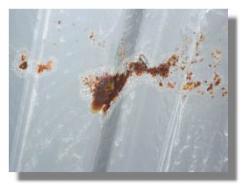
When paint peels off metal laminates, cleaning the loose paint is a lot of work. It is necessary to prepare the surface for another coat of new paint. Corrosion begins on the exterior surfaces of the laminates as well as on the undersides of the laminates. As the metal is exposed to further humidity, if the roof surface is not consistently maintained with sufficient anti-corrosive paint, corrosion spreads easily.
Infiltrating moisture
The majority of builders use corrugated metal laminates for roofing in Costa Rica. These laminates are screwed into lightweight wood or metal structures. Moisture is not prevented from infiltrating dwellings because proper sheathing and waterproofing underlayment are seldom used. So when corrosion begins on the bottom of metal laminates, it spreads like cancer.
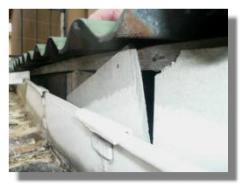
For some roofing installations, plywood sheathing was used. However, drip edge flashing is rarely used. When the gutters fill during heavy rain, water backs up onto the sheathing. This causes the plywood to warp and to enter the soffits and onto the fascias. The absence of flashing is one of the most common problems here in Costa Rica. Most local tradesmen don’t know how to properly install flashing materials.
A variety of damages
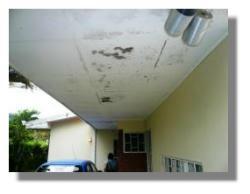
The shortcomings of these inferior roofing installations result in a variety of damage to homes. Full gutters always flow inward. Once water is inside the overhangs, it causes moisture damage to the ceilings and soffits and eventually becomes visible on the exterior of the overhanging soffits.
Labor and Cost Considerations
Roof repairs in Costa Rica are generally more affordable than in North America, largely due to lower labor costs. However, quality varies widely among contractors. Some repairs are done quickly and cheaply but may not last through the next rainy season.
Homeowners should prioritize experienced roofing contractors and proper materials rather than simply choosing the lowest bid. In many cases, spending a little more on quality installation can prevent recurring repairs.
Mold is a Huge Problem
When a roof leaks, mold is one of the most common and serious consequences inside a home. In humid climates like Costa Rica, mold can begin growing very quickly once moisture enters the structure.
Below is how mold develops and why it becomes a problem.
1. How a Roof Leak Creates Mold
A leaking roof allows water to enter the roof structure, insulation, ceiling, drywall, and wooden beams. These materials absorb moisture.
Mold only needs three things to grow:
- Moisture
- Organic material (wood, drywall, dust, insulation)
- Warm temperatures
Because tropical climates are warm and humid, mold growth can begin within 24–48 hours after materials become wet.
2. Where Mold Usually Appears
When a roof leaks, mold often develops in places you cannot easily see, such as:
- Inside the attic or roof structure
- Behind drywall ceilings
- On wooden rafters or trusses
- Inside insulation
- Around light fixtures in the ceiling
- Along walls where water travels downward
Often, the first visible signs appear weeks later, even though the mold has already spread.
3. Warning Signs of Mold From a Roof Leak
Typical indicators include:
- Musty smell in rooms or attic
- Dark or green spots on ceilings or walls
- Peeling paint or bubbling drywall
- Water stains or yellow/brown rings on the ceiling
- Allergies or respiratory irritation indoors
- Sometimes the odor appears before any stains are visible.
4. Health Concerns
Mold exposure can cause:
- Allergies
- Sinus irritation
- Headaches
- Asthma flare-ups
- Respiratory problems in sensitive people
- Children, elderly people, and those with asthma are the most affected.
6. Why This Is a Bigger Issue in Tropical Climates
In tropical regions like Costa Rica, mold spreads faster because of:
- High humidity year-round
- Warm temperatures
- Long rainy seasons
- Poor attic ventilation in many homes
Even a small roof leak during the rainy season can lead to widespread mold growth if not repaired quickly.
A Critical Component of Tropical Living
In a tropical country like Costa Rica, a well-built roof is more than just a structural element—it is the home’s first line of defense against nature. Heavy rain, intense sunlight, humidity, and occasional storms place constant stress on roofing materials.
For property owners, regular maintenance and timely repairs are essential. A neglected roof can quickly turn into a serious problem, while a well-maintained one can protect a home for decades. Understanding the realities of roofing in Costa Rica allows homeowners to preserve both the comfort and the value of their property.