

Estimated Reading Time: 10 minutes
When looking at property online, Costa Rican homes might not be what you expect. Many people dream of owning a home in Costa Rica. They picture tropical beaches, lush mountains, and a relaxed lifestyle. While Costa Rica certainly offers all of these attractions, newcomers are often surprised to discover that homes in Costa Rica can be very different from what they are accustomed to in North America or Europe. I’m going to compare U.S. homes/lifestyle with Costa Rican homes, because a large part of our clients come from the United States.
Here are a few things you should look at for starters:
Construction type
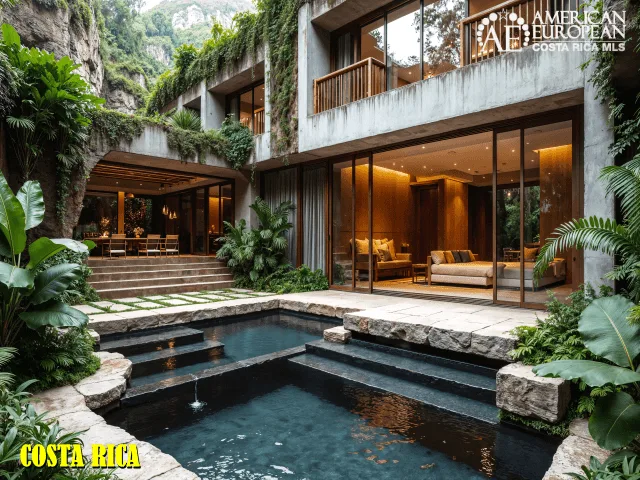
One of the first surprises is the construction style. In many parts of Costa Rica, homes are built primarily with concrete rather than wood. Concrete walls, floors, and roofs are common because they are durable, termite-resistant, and well-suited to the country’s tropical climate. As a result, homes often feel more solid and secure than the wood-frame houses many foreigners know.
Indoor- Outdoor Living
Another unexpected feature is the relationship between indoor and outdoor living. Costa Rican homes are often designed to embrace the climate rather than shut it out. Large covered terraces, open-air living spaces, and expansive windows are common. Instead of spending most of their time indoors, residents frequently use patios and gardens as extensions of their living areas.
Temps and Rainfall
Climate also influences many home features. In the Central Valley, where temperatures are moderate year-round, heating and air conditioning are often unnecessary. Many homes rely on natural ventilation instead. At higher elevations, evenings can be cool, while homes in coastal regions may incorporate high ceilings, ceiling fans, and shaded outdoor spaces to stay comfortable.
Architectural Style
Buyers are sometimes surprised by the variety of architectural styles. Traditional Costa Rican homes may feature colorful designs and practical layouts, while newer developments offer contemporary luxury residences with modern finishes and stunning views. It is not uncommon to find a simple home next to an impressive custom-built villa, reflecting the diversity of the country’s housing market.
Services and Infrastructure
Infrastructure can also differ from expectations. Some rural properties may rely on private wells, septic systems, or unpaved access roads. Internet service is widely available in many areas, but speeds and reliability can vary depending on location. For those seeking a remote lifestyle, these factors are important considerations.
Visit first
Every day, we receive emails from potential customers who ask all kinds of questions about hundreds of properties they found on our website. But they have never been to Costa Rica. So sending those buyers more pictures and responding to their questions is a waste of time for both the client and the agent. Please visit first, find the right community to live in, try them out for a couple of months, and then start looking at properties for sale.
Perhaps the biggest surprise is the value of location. In Costa Rica, a home’s setting often plays an even greater role than the structure itself. Buyers may prioritize mountain views, ocean vistas, cooler climates, proximity to nature, or easy access to local communities. A modest home with an extraordinary view can be more desirable than a larger property in a less attractive location.
Lifestyle
Most of us have an acquired lifestyle and are used to certain services and amenities a home offers. Costa Rica is a tropical country with a distinct culture and habits, and you might be in for a surprise with those amenities. People from a different culture might place a whole different value on the necessities of these amenities, which might be unacceptable to you until you have seen the logic behind it.
In my experience, your budget depends largely on where you’re moving and how well you sell your house. Costa Rican homes listed at $300,000 may be much higher than you are accustomed to, or much, much lower. So you might have to adjust your budget, and this article will help you do so. Most of the time, the difference is because of what I’ll show you below
With this blog, I don’t mean to hurt the Costa Ricans’ feelings. I just want to explain the differences in lifestyle to you so you won’t experience culture shock. When you are buying Costa Rica real estate, you have to know that most middle-class Costa Ricans place very little value on:
Key Differences Between Homes in the United States and Costa Rica
For many buyers relocating to Costa Rica, one of the biggest surprises is how different homes can be from those in the United States and other countries. While modern luxury homes exist in both countries, construction methods, design priorities, and everyday living features often reflect very different climates, cultures, and lifestyles.
1. Construction Materials
United States
- Most homes are built with wood-frame construction.
- Drywall is commonly used for interior walls.
- Asphalt shingle roofs are widespread.
Costa Rica
- Concrete block and reinforced concrete construction are the norm.
- Interior walls are often concrete rather than drywall, although many apartment buildings have drywall between rooms.
- Tile or metal roofs are common.
Why? Costa Rica’s tropical climate, termites, humidity, and seismic activity make concrete a preferred building material.
2. Heating and Air Conditioning
United States
- Central heating is standard in most regions.
- Air conditioning is common, especially in warmer states.
- Homes are designed to be tightly sealed and insulated.
Costa Rica
- Most homes in the Central Valley have neither heating nor central air conditioning.
- Natural ventilation, large windows, and ceiling fans are often sufficient.
- Insulation is less common.
3. Indoor vs. Outdoor Living
United States
- Living space is generally focused indoors.
- Patios and decks are often secondary spaces.
Costa Rica
- Covered terraces, outdoor dining areas, and gardens are central to daily life.
- Many homeowners spend as much time outdoors as indoors.
- Homes are often designed to maximize views and fresh air.
4. Windows and Screens
United States
- Double-pane insulated windows are common.
- Most homes have window screens.
Costa Rica
- Single-pane windows are typical.
- Screens may not be present in every home.
- Homes often prioritize airflow over insulation.
5. Water Systems
United States
- Municipal water systems are standard in urban and suburban areas.
Costa Rica
- Municipal water is common in cities and towns.
- Rural homes may use private wells, community water systems (asadas), or water storage tanks.
6. Wastewater Systems
United States
- Municipal sewer systems are common.
Costa Rica
- Septic systems are widely used, even in many upscale communities.
- Condominiums have a water treatment plant.
- You will find very few sewer systems, even in major urban areas.
7. Property Size
United States
- Suburban homes often sit on relatively small lots.
- Large lots are generally found in rural areas.
Costa Rica
- Even modest Costa Rican homes may have large gardens and outdoor spaces, except in urban areas.
- Many buyers seek acreage, mountain views, or privacy.
8. Garages
United States
- Enclosed garages are standard.
- Garages often serve as storage areas.
Costa Rica
- Covered carports are more common than enclosed garages.
- Outdoor parking is widely accepted.
9. Home Security
United States
- Alarm systems and cameras are common.
- Security bars on windows are relatively uncommon.
Costa Rica
- Security walls, gates, electric fencing, and window bars are more common.
- Many gated communities offer 24-hour security.
10. Laundry Areas
United States
- Laundry rooms are usually inside the home.
Costa Rica
- Laundry areas are often located in utility rooms, covered outdoor spaces, or service areas.
11. Hot Water Systems
United States
- Whole-house water heaters are standard.
Costa Rica
- Many homes use on-demand electric water heaters.
- Some bathrooms or sinks may have separate heating systems.
12. Lifestyle Priorities
United States
- Buyers often focus on square footage, school districts, and commuting distance.
Costa Rica
- Buyers frequently prioritize climate, views, nature, privacy, and proximity to beaches or mountains.
- The quality of outdoor living space often matters more than interior square footage.
More Differences between Costa Rican Homes and Others
Here are a few other details you might like (or not):
Formal dining room
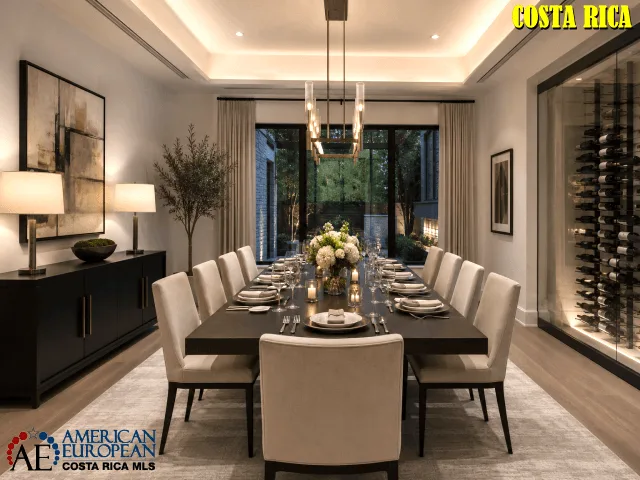
Ticos generally invite only family over to their home; they have no need for a formal dining room and instead have a combined living-dining room. Only larger homes owned by people who socialize a lot have a separate dining room.
Family or TV room
Many Costa Rican homes don’t have a family or TV room; they watch in the living room. Some use a bedroom as a TV room. It’s very unusual to find a TV in each bedroom, although most have one in the master bedroom. To watch a game with friends, they will go to a bar or restaurant.
A nice kitchen
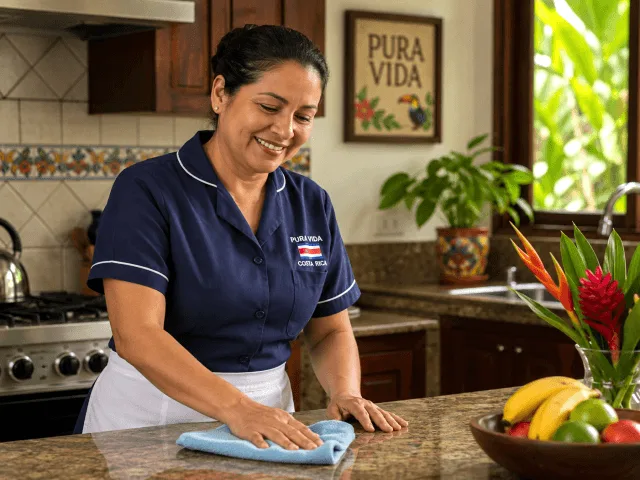
Since the maid or housekeeper does the cooking, the kitchen is not the place where the family gathers when they are all together. The kitchen is mostly the maid’s territory, not part of an open floor plan. Modern homes and apartments do have an open floor plan more often.
Pantry
They buy small quantities and do not have much use for a pantry. Modern or larger homes might have a pantry or additional kitchen cabinetry (in higher price ranges).
Large master suite
For Ticos, a bedroom is just a place to sleep, although luxury homes do often have a sitting area, a study, or a large balcony.
Storage areas
Costa Rica doesn’t have four seasons, only two: the dry season and the green season. So they have much less stuff to put away. Also, their wardrobe is used year-round, so closet space is much smaller than what you are used to.
Finishes
Costa Ricans live a lot outdoors. Besides that, they’ll not invite strangers or even friends to their homes so easily, only their family, so they have no need to show off their house.
Views
They are born to views, so they do not appreciate views as much as you and I do. Often they’ll build their home with the back to the views!
Garden & Yard
City people do not value a backyard; it only gives them a lot of work to maintain it. Usually, someone in the family owns land with a cottage in the countryside. Here, they call that a “Quinta” and that’s where they go when they need some leisure. But we offer plenty of Costa Rican homes for sale with a large garden.
Costa Ricans do value
A simple and easy life. In the city, because of foreign influence (expats, cable TV, advertising), people are familiar with the world’s luxuries. That’s the reason for all the changes in the Central Valley. In the rural areas, you’ll still find the way of life your grandparents and great-grandparents had.
The Costa Rican middle and upper classes have traveled extensively and even lived abroad. There, they have learned the ways of the “gringo”, so when you are buying property for sale in Costa Rica, you’ll find that homes priced over $200,000 offer much more of what you expect a home to have. That is where the “American price” starts.
Check us out!
I invite you to search for Costa Rican homes for sale on our website now and check out the lower price ranges if you are looking for Tico prices. You will find some really great Tico homes for sale at Tico prices, without hot water. With a small investment, you can turn them into your dream home in Costa Rica.
Feel free to leave your comments on this blog or share it on your social media. Would you like a Zoom meeting with me?
I am Ivo Henfling, the founder of GoDutch Realty, widely regarded as the leading real estate authority in Costa Rica. Feel free to contact me now. Are you ready to purchase or sell one of the most beautiful Costa Rican homes now? Then contact us now.